Have any question?
Call (409) 861-4450

Call (409) 861-4450

The short answer for why your login needs to be more complex is that hackers leveled up.
While the ongoing development of quantum computing is a real threat—since it’s capable of testing nearly infinite keys simultaneously—you do not need a supercomputer to break a weak password today. A modern graphics card, the kind found in a standard gaming PC, can shred a basic 8-character password in under sixty seconds. If a hobbyist can do it, imagine what a professional syndicate can do.
What’s your business’ biggest network security weakness? Contrary to popular belief, it’s not your security solutions like your firewall and antivirus; it’s your employees and their everyday practices that put your business at the most risk. Today, we want to cover the three most common accidental ways your employees might be putting your business at risk (and what you can do about them).
Security can be challenging, even when you have the requisite protections in place. Passwords are too easy to forget, and a fob or token can be misplaced. One thing that’s a lot harder to forget or lose, however: your fingerprint.
Why not take advantage of what you and your entire team inherently possess to help protect your business? Let’s dive into how biometrics—who you are—is quickly overtaking “what you know.”
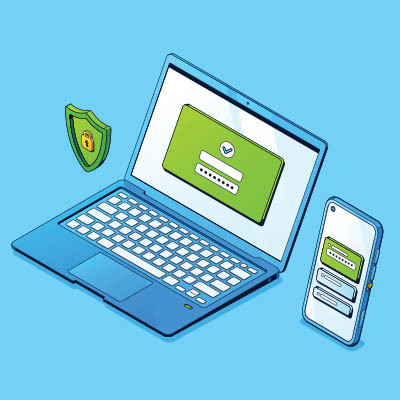
Two-factor authentication can be one of the most impactful security tools your organization has. This is because passwords play a massive part in the security of your most crucial digital assets; and frankly, it keeps passwords as a viable solution to keep apps and data secure.

Absolutely nobody likes dealing with passwords. They’re annoying, hard to remember, and yet, somehow, hackers seem to have no problem cracking them. That’s where password managers come in. They take the stress out of remembering a hundred different logins while keeping your business secure. If you’re still relying on sticky notes or using the same password for everything so you can remember it, it’s time to make the switch.
Most accounts these days require a password of some sort, and as such, the average user has countless of these codes that need to be kept both secure and top-of-mind. Some web browsers have built-in password management tools to help make them more user-friendly, but with so much convenience involved, one has to ask whether or not these built-in management tools are as secure as they should be.
If I were to tell you that one variable was responsible for more than 80 percent of cyberattacks, what would you guess that variable was? If you guessed “stolen access credentials,” you’d be correct. The traditional username/password combination may soon be a thing of the past as more tech companies transition to alternative authentication measures.
The funny thing about some documents is how the data written on them can strongly influence how important they are. If, for instance, there were two pieces of paper on a table, there is objectively no difference between the two, and so they are objectively equivalent in value.
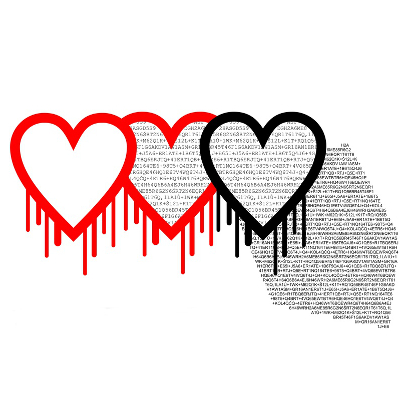 On April 7th, a new bug on the Internet was discovered that's putting millions of users' personal data at risk. Given the name "Heartbleed bug," it's capable of allowing infiltrators to collect information while you are securely browsing a SSL/TLS website. Since SSL/TLS is so widely used, it's very probably that your personal data is at risk.

A new email scam is making its rounds and it has a lot of people concerned with just how much a hacker can peer into one’s private life. How would you react if a stranger emailed you saying they had inappropriate webcam footage of you?

There is no understating the importance of strong, reliable passwords to your organization’s network security, especially to protect its wireless connection. However, this can create some friction with your staff when they try to connect to Wi-Fi using their mobile device. To make accessing the Internet easier, scannable QR codes can be used to connect to the Internet.
Security is a hot-button issue for all types of businesses, but cyber security is such a complex subject that it’s difficult to jam-pack its many intricacies into one blog article. Sometimes understanding just a few ways to improve your business’s security practices can be a significant benefit for your organization.
 Changing your password is a pain. After you’ve gone several months with the same one, it can be difficult to remember your new password. Despite this, it’s always recommended that you change your passwords often. Unfortunately, when you change all of your passwords often, it’s even easier to forget them. Instead of using a post-it note on your monitor, you should instead try using a password manager.
 This holiday season might leave technology and entertainment supergiant Sony with nothing but a big lump of coal in its stocking. In a high-profile hack, hackers continue to leak Sony’s employees’ sensitive information like Social Security numbers, passports, and even personal emails. This is obviously an issue for the company, but so is its lack of IT security, as shown by their passwords being stored in a folder named “Passwords.”
 Do you see those black clouds culminating on the horizon? They represent the possibility that hackers will gain access to your cloud storage. Though it is protected a number of ways, it will not stop an experienced hacker. To them, your defenses are as transparent as those thin, wispy, cirrus clouds that are so welcome on a boiling hot summer day.
 Last week, the Heartbleed bug was identified as a weakness in the OpenSSL cryptographic library, potentially leaking two-thirds of the Internet's secure information from any websites utilizing this encryption style. While most major websites such as Google, Yahoo, and Facebook released patches quickly, it does little to actually remediate the problem. Your data could have been leaked over the year-plus that the vulnerability could have been accessed. There is no way to know if it has been compromised.
 On December 3, 2013, security company Trustwave discovered over two million stolen user passwords for popular online services like Facebook, LinkedIn, Google, Twitter, Yahoo, and 93,000 other websites. There's a high probability that you use one of the services affected by the hack. Is your personal information compromised?
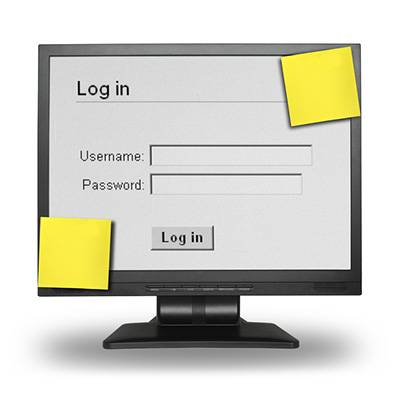 Last time, we spoke about password security, we went over the importance of using strong passwords to avoid identity theft. In part two, we will discuss three easy password solutions that can help you manage all of your different passwords.
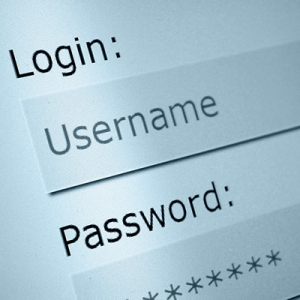
For sites you need to log into often, having your browser remember your password can save you time logging in, especially if you are using secure passwords that you might need to look up otherwise. There are circumstances where you might want to manage what personal information gets stored in your web browser.

LinkedIn, the popular social network geared towards business networking and communication, has reported a major breach in security. A file containing over six million passwords was leaked and posted on the Internet.
What does this mean for you, and what course of action should you take?
Get the Knowledge You Need to Make IT Decisions
Technology is constantly evolving, and keeping up can feel overwhelming. Whether you want to understand cybersecurity threats, explore automation, or learn how regulations like PCI DSS impact your business, we’ve made it easy to access clear, straightforward insights on key IT topics.
Learn more about what NetWorthy Systems can do for your business.
NetWorthy Systems
701 W. Division Ave Suite 100
Orange, Texas 77630